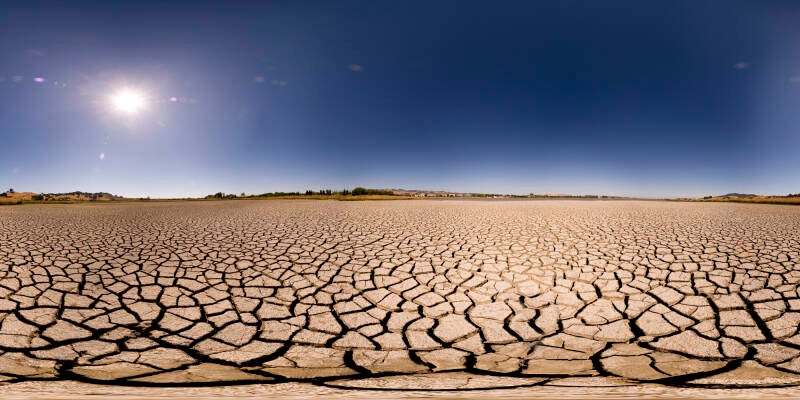
Even though we often express it that way, we are not actually trying to save the world. Unless an asteroid strikes, or there is some comparable cosmic disaster, the world will continue. Its atmosphere may change, its creatures may die out, it may end up ruled by insects or bacteria, but in some form it will remain.
Our current concern is much more specific, that is, trying to save the world as a place for human habitation. Or, to be even more specific, trying to save the world for humans to live under the liberal capitalist system - and this is where the contradictions appear.
There is a prevailing idea about climate change: that judicious adjustments to the way we run the capitalist system can address the problem. Let us transition from fossil fuels, use electric cars, reduce plastic pollution, clean up aviation, buy locally produced food and so on. This, at least, is the global Northern point of view. Whatever intentions COP-26 may have about saving the world in general, it seems clear that the advanced economies are mainly concerned with saving themselves.
However, their only way of proceeding, according to the logic of the system, is by the continuous reproduction of capital. Always to be expanding production, and always to be seeking new markets, militates against the retrenchment that will be necessary to lift the burden from the planet and its resources. The pressure on the environment is now beginning, for example, to demand that coal and oil remain unexploited, that they be left in the ground. To liberal capitalism this is simply not feasible.
Inequality
Another of the many problems of capitalism is that, though it promises universal benefits, it depends on inequality. Capital accumulation depends on concentrating wealth in a few hands and on the immiserisation of many. The global workforce is paid as little as is necessary to enable it to exist, to produce and to buy the products of its own labour. And beyond that workforce are millions, even billions, of people, whose lives are lived largely or wholly outside the capitalist system. They are not a relevant labour-force and not consumers, so the profit-makers ignore, or disdain, their needs - as did Jair Bolsonaro whose reported ‘dream’ was to expel the people of the Amazon basin and to open it up for mining.
The environmental crisis bears most heavily on those who are ignored. Rising sea levels threaten coastal and island dwellers. Rising temperatures bring desertification and famine, and force rural populations to migrate. Water shortages create conflict between different communities. Rapid urban growth condemns millions to squalid living conditions in disease-ridden shanty-towns. Perpetual war destroys whole environments and turns tens of thousands of people into homeless refugees. It is very well for the global North to invent new technologies for itself when a quarter of the people of the world don’t even have clean water to drink.
Greenwash
The privileged North hopes to insulate itself from such problems; the super-rich most of all. As it is, we may expect fossil capitalism to hang on, slightly adjusted if necessary, but essentially unhindered. It will claim green credentials. It will participate in ‘Green New Deals’. Devising green ‘alternatives’ can be profitable in itself, and can also be used to ‘greenwash’ a continuing reliance on carbon-heavy production. Research by Big Oil into environmentally friendly forms of power need fool no-one.
But if COP-26 is really about ‘saving the world’, then it must be for all the world’s people.
It is impossible for the economic system which has destroyed our environment, and whose adherents deliberately ignore much of the world’s population, to be the means of saving it. ‘Your thinking,’ said Paul Goodman in his famous 1967 address to what he called the military-industrial complex, ‘is never to simplify and retrench, but always to devise new equipment to alleviate the mess you have helped to make with your previous equipment’.
How can this dreary scenario be countered? As yet, there is no unified fight-back - though almost everywhere there are the stirrings of popular movements against the status quo. For the moment, we may expect that the corporate system to continue, while conditions become steadily worse. Temperatures will rise, deserts will form, ice will melt and social tragedy will intensify. But, as Rosa Luxemburg said - and it is still true - the choice is between socialism and barbarism. The hope must be that individual protest movements will grow and coalesce, sufficient to challenge the predominance of the nation-states, the morbid power of the multi-nationals, the unholy alliance between governments, the military and the arms dealers, and their total reliance on the logic of capital accumulation.
Photo: Huffington Post
Add comment
Comments