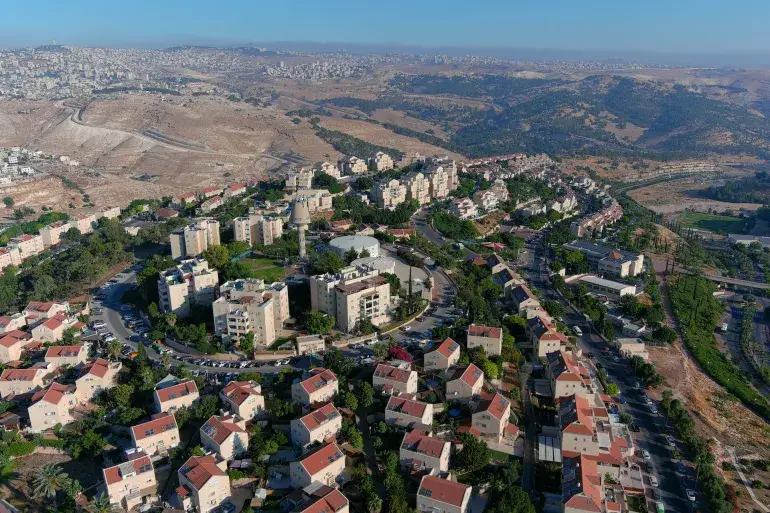
In 2008, my wife and I visited Palestine for the first time. We had read the Palestinian lawyer Raja Shehadeh’s Palestinian Walks, about his 40 years in the Palestinian countryside. When he had started it had been over the landscape Jesus would have recognised. The landscape we saw in 2008 had become something very different. Concrete roads with hundreds of roadblocks barred the way. Wooded hilltops were being cleared and replaced with concrete settlements, The Wall of Separation was being built, augmented with wire and gun positions, snaking across the hills and valleys and annexing Palestinian land. Palestinians’ houses were being demolished, their olive groves destroyed and their wells concreted in. And the whole morbid project was enforced by Israel’s army, police and its civilian settlers.
Another book, published at about the same time, argued that all this reshaping had a specific purpose. Hollow Land, by the Israeli architect Eyal Weizman, made it clear that the physical environment had become a weapon in Israel’s drive for total hegemony. Control of Palestinian land, control of development and of movement within it, control of the sea, and of the air above, are all enabling a powerful settler-colonial regime to dominate the people whose land it is. Two decades later still we can see this vicious scenario playing out with ever greater force. We have the cruel destruction of thousands of lives and livelihoods and the indifferent destruction of the victims’ history, culture and environment. Another Year Zero is being imposed.
Ecocide
Governments talk easily of meeting ‘net zero’ emissions targets in a few years time. But there are few signs of this. The routine over-use of energy and resources is taking us the other way. Even worse - and all the worse for not being on the international agenda at all - is the huge mis-use of energy and resources by military action, all over the world.
Military action uses environmental atrocities as weapons, whether it be through siege and starvation, or the deliberate destruction of infrastructure and resources in order to deny them to the enemy, to enforce capitulation or implement genocide. This has happened many times in the past and continues to do so. Even since WW2 we think of Pol Pot, of the use of Agent Orange in the Vietnam War, of Saddam's setting fire to oil wells, of the total destruction of Fallujah. The human cost of genocide is horrific - but a genocide is not only the death of a people. It is also the attempted erasure of its economy, its history and its culture and, ironically, its land, the very object that the invader is seeking..
In Palestine
Palestine is a multi-cultural corner of the world whose history goes back some 8000 years. The erasure of Gaza is involving total destruction not only of its culture and history, but of its physical environment. Millions of tonnes of greenhouse gases have been emitted, Gaza’s physical fabric is destroyed, its farmland totally lost, its soil and its groundwater polluted. Thousands of tonnes of raw sewage have been discharged into the sea. The historic energy embodied in the construction of its buildings and cities over the years is now totally lost. And any reconstruction will involve the energy costs of years of clearance, and rebuilding will involve the expenditure of more yet more energy and yet more emissions. In the West Bank, the concrete houses of more than 700,000 Jewish settlers displace the once-wooded hillsides, or conceal the ruins of once-thriving Palestinian villages. The water supply is siphoned off to Israel. Concrete roads, roadblocks, checkpoints, barriers, barbed wire, toxic rubbish dumps spread through the ancient landscape.
Entitlement
One of the key theories of modern Zionism was the idea that the Jews of Europe had long hoped for a ‘return’ to the ancestral land from which the Romans had expelled them 1900 years before, and with which they had a uniquely special relationship. No matter that the European Jews had a very questionable genetic or historic relationship with the Israelites of the Old Testament and their foundation myth. It was argued that the deity's promise in the Torah of ownership of the land also applied to them. This strategy was strongly promoted by both Christian and Jewish Zionists during the second half of the 19th century.
This view helped to drive the European colonisation of Palestine. Organised action began in the second half of the 19th century, given impetus by the Tsarist pogroms of the 1880s. The first Zionist Congress took place in 1897. At this stage there was at least the possibility of a peaceful assimilation of European Jews into Palestinian society. Palestine, after all, had been a melting pot of cultures for thousands of years. It is well-known as the birthplace of the three Abrahamic religions. Over many years there had been many examples of a workable co-existence between all its different groups, including Jewish ones. Even during the British mandate, individual European Jewish refugees were treated hospitably by their Palestinian neighbours.
Displacement
But it had been at the Zionist Congress, supported later by such interventions as the Balfour Declaration, that the idea of unquestionable sole entitlement to the land of Palestine started to emerge as a guiding ideology. The settlement of Israel by progressive Jews after WW2 received initial support from the European Left. But the extinction of existing Palestinian society was the Zionist intention, becoming ever more explicit. Eventually, as we now see, it took horrific physical shape. The existing people of Palestine, who might have been partners, instead became expendable. Paradoxically, so did the land itself. It was an ultimate irony that this new society, which derived its justification from some supposed affinity with the land, its ecology. its history and its culture, should be responsible for destroying it.
Photo: A West Bank settlement - making the desert bloom? Ilan Rosenberg/Reuters/Aljazeera
Add comment
Comments